

- This event has passed.
Sprinkler system controls Hereford factory fire involving lithium-ion batteries
May 1 @ 8:00 am - May 31 @ 5:00 pm
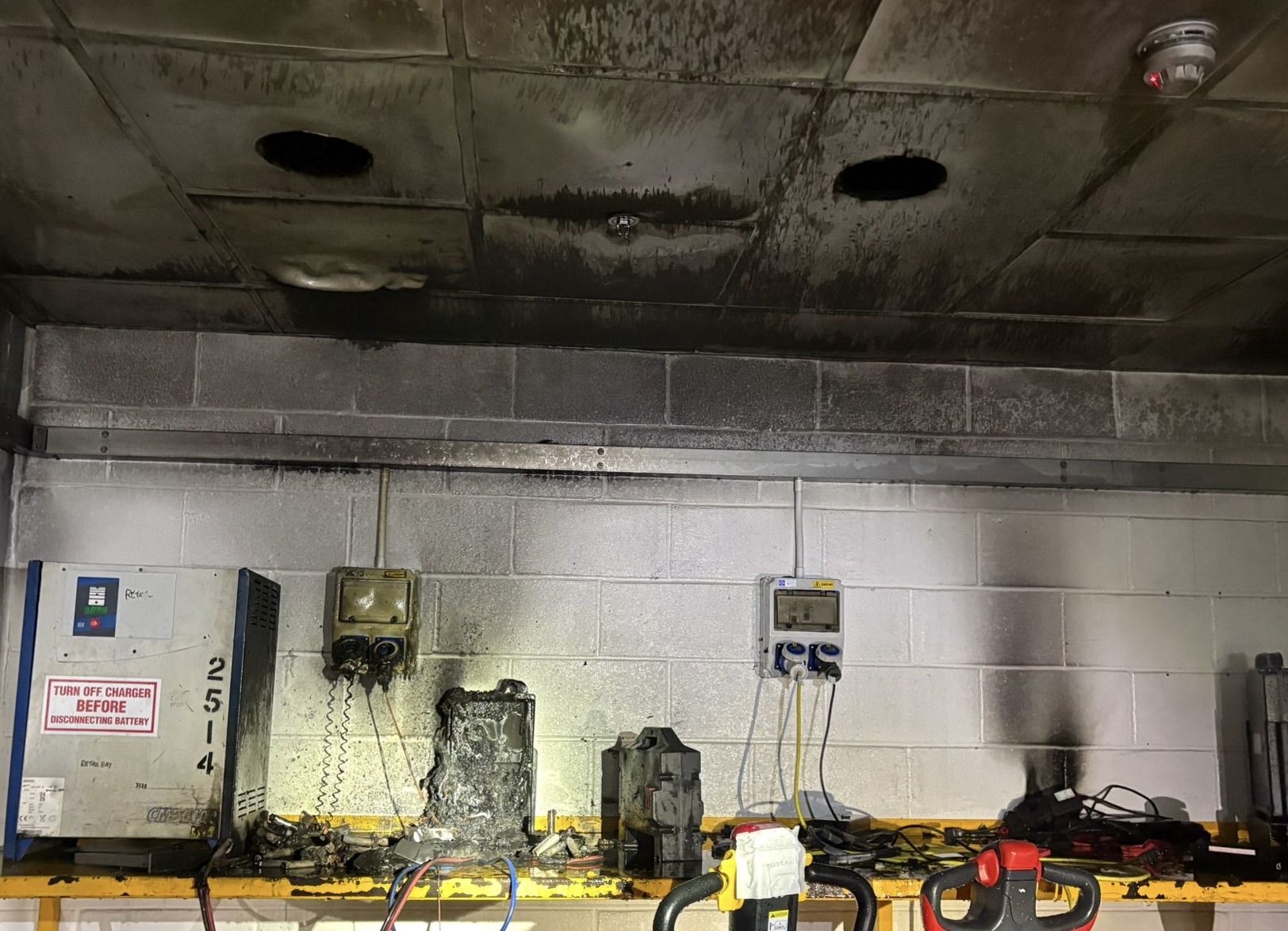
Credit Image, Hereford & Worcester Fire and Rescue Service (HWFRS)
“This incident clearly demonstrates how effective automatic sprinkler systems are in controlling fires at an early stage, significantly reducing damage and risk. At Hereford & Worcester Fire and Rescue Service, we continue to promote the wider use of sprinklers as part of a comprehensive fire safety strategy. Our position on sprinklers complements the NFCC’s position statement setting out the clear benefits they provide in protecting life, property and business continuity, and we encourage those responsible for buildings to consider their installation wherever possible.”
— Dan Willey, Fire Safety Manager, Hereford & Worcester Fire and Rescue Service
Summary
In May 2026, Hereford & Worcester Fire and Rescue Service (HWFRS) attended a fire at a food processing factory. The building’s sprinkler system activated before crews arrived, containing and controlling the fire.
This incident demonstrates that sprinklers can control fires before the fire can escalate in this case involving lithium-ion batteries limiting fire damage, preserves business continuity and reducing the risk to people, firefighters, property and the environment, even though such protection is not a requirement for factories under the current building regulations.
This case adds to the evidence that sprinkler systems are reliable and effective, reinforcing findings from the report by 1Optimal Economics, commissioned by the National Fire Chiefs Council and the National Fire Sprinkler Network, on the role of sprinklers in controlling and extinguishing fires as part of a comprehensive fire safety strategy.
It also strengthens the British Automatic Fire Sprinkler Association’s case for installing sprinklers in industrial premises by providing practical evidence to support policy and parliamentary engagement, helping to expand sprinkler use across the built environment.
The Incident
- Date of Incident: May 2026
- Time of Call: 14:32 hrs
- Fire Service Attendance: 14:37 hrs
- Stop Message: 16:40 hrs
- Location: Hereford
- Premises: Food Processing Factory
- Fire Location: Battery Charging Room
- Fire Protection System: Wet Pipe Automatic Fire Suppression System
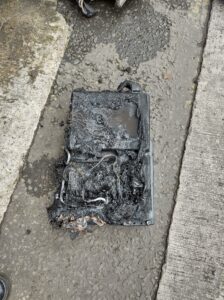
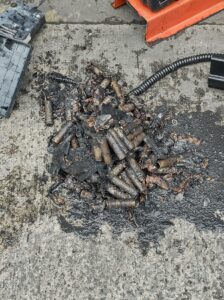
Credit Image, Hereford & Worcester Fire and Rescue Service (HWFRS)
- The alarm was raised by the activation of the smoke detector located within the battery charging room in close proximity to the fire.
- Site engineers who responded to the incident, observed a lithium-ion pack used to power a battery-operated pallet truck on the shelving unit involved in the fire, failing aggressively, ejecting cells across the compartment.
- 1 sprinkler head operated, located above the seat of the fire containing and controlling the fire before the arrival of the HWFRS.
- Firefighters wearing breathing apparatus were committed who extinguished the fire using 1 hose reel jet.
- Confirming that the sprinkler system had contained the fire to the compartment of origin, preventing further spread.
- The battery pack was removed, submerged in water to cool and stabilise the cells.
- Damage was limited to the battery pack and the immediate area around it, with only smoke damage sustained in the compartment of origin.
- Enquires are ongoing to establish the cause of the fire, initial indications are that the fire was caused by an internal failure within the battery or manufacturing defect.
Conclusion
This incident further shows how effective sprinkler protection can be as part of a package of fire safety measures, in this case where lithium-ion batteries are present.
- Despite the intensity of the fire, the system activated quickly, controlling the fire at an early stage, and significantly reduced damage while preventing escalation.
- Preventing large costly fires for businesses is possible through a combination of strategies. One of the most effective strategies to contain such incidents is the use of automatic sprinkler systems aiding the Fire and Rescue Service when they arrive.
- They can therefore minimise the wider impact of fires, reducing costs to business and the economy.
- Importantly, by limiting any fire damage, they allow businesses to resume operations quickly, often within hours of the incident as demonstrated with this incident.
- 2Sprinkler protection of lithium-ion batteries is outside the scope of current standard sprinkler design standards e.g. EN, NFPA/FM, however, specialist standards are being developed for example NPFA 855
For change, increasing the presence of sprinklers in the built environment we need the evidence, to conduct effective advocacy and policy lobbying. If you have knowledge of a sprinkler incident that may contribute to this initiative, please provide the pertinent details using the sprinkler activation reporting form available at www.sprinklersaves.co.uk.
My thanks to Hereford & Worcester Fire and Rescue Service for reporting this incident allowing a comprehensive review to be published demonstrating the benefits of sprinklers.
Sources/further reading
- Sprinkler Saves Review 2025/26
- Sprinkler Saves Spring update
- NFSN Newsletter
- 1Efficiency and Effectiven ess of sprinkler systems in the United Kingdom: An Analysis from Fire Service Data
- 2Fire Industry Association, Guidance on Li Ion Battery Fires
If you want to make a difference working in the fire sector, we need your assistance. To make sprinklers the norm and not the exception – we need the evidence. Encouraging FRS and those in the sprinkler community to promote, collate, report sprinkler activations to Sprinkler Saves UK which will help to create a central and comprehensive record of fire incidents where sprinklers played their role in containing/controlling or extinguishing the fire.
If you hear of a save report it using this link.